
Choosing a Pizza Oven For Sale from China requires more than comparing prices and attractive product photos. Buyers should examine manufacturer experience, production capacity, heating performance, materials, certifications, and after-sales support. A reliable supplier can explain cooking temperatures, insulation thickness, fuel options, and expected maintenance without vague promises. These details matter when an oven operates for hours in a busy restaurant or outdoor kitchen.
This guide introduces ten notable Chinese pizza oven manufacturers for sale and explains what makes each company worth evaluating. The comparison considers commercial deck ovens, gas-fired models, electric units, wood-fired designs, and portable ovens. Practical details will receive attention, including stainless-steel grades, stone thickness, temperature recovery, packaging quality, and delivery communication. A strong factory should provide clear specifications, test videos, sample orders, and responsive technical support. Ask for evidence.
However, no manufacturer is perfect for every buyer. Some companies may offer excellent customization but slower production times. Others may provide competitive prices while offering fewer branding options. Product information can also change, so readers should verify certifications, warranty terms, and export experience directly. This review aims to support careful decisions, not promote one supplier blindly. In real purchasing, the cheapest oven may become expensive after shipping, installation, repairs, or delayed spare parts. I may overlook a developing manufacturer, so independent checks remain necessary. Examine the details closely.
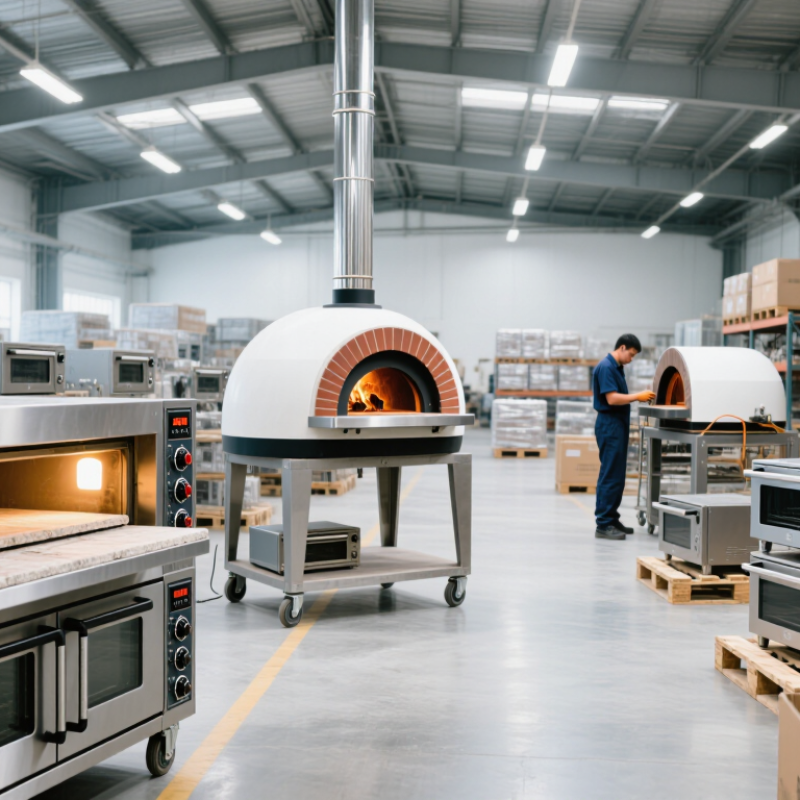
China’s pizza oven manufacturing industry is moving from low-cost assembly toward specialized, export-ready equipment. Grand View Research valued the global pizza oven market at about USD 1.9 billion in 2023. It forecasts a 6.7% compound annual growth rate from 2024 to 2030. Mordor Intelligence expects the market to reach nearly USD 2.1 billion by 2029. These figures encourage Chinese factories to develop countertop, deck, conveyor, and commercial gas-fired ovens.
China’s advantage is its connected supply chain. Sheet-metal processing, heating elements, insulation, controllers, and packaging are often available within one production region. Factory audits commonly examine stainless-steel thickness, weld quality, temperature recovery, and insulation performance. A high advertised temperature proves little. Recovery time matters more.
Buyers should request test records, wiring diagrams, energy data, and sample cooking results before placing large orders. Certification documents must match the destination market.
The picture is not perfect. Product listings can look remarkably similar, while internal components vary sharply. Some workshops also depend heavily on outsourced controllers or burners. That can complicate repairs. Reliable manufacturers usually maintain incoming inspection, final safety testing, and spare-parts plans. The China Chamber of Commerce data and customs classifications provide useful trade context, but they rarely reveal factory-level consistency. Direct audits remain necessary. Reports show market growth, not every oven’s real durability.
When evaluating Chinese pizza oven manufacturers, begin with evidence, not attractive catalog photos. Grand View Research estimated the global pizza oven market at about USD 1.4 billion in 2023. That growth increases supplier choices, but also increases inconsistent quality. Ask for factory registration, production capacity, material specifications, and recent export records. A video call should show the welding area, insulation, testing equipment, and finished ovens.
Check thermal performance carefully. Request test data for heat-up time, temperature stability, energy consumption, and cooking recovery. For commercial models, examine stainless-steel grade, stone thickness, door seals, burner design, and electrical protection. Independent reports from Intertek, SGS, or equivalent laboratories provide stronger evidence than supplier claims. Confirm whether certificates match the exact model, voltage, gas type, and destination market. A certificate for another product proves little.
Ask for sample testing before placing a large order. Measure the oven with an infrared thermometer, then compare readings across the baking surface. Inspect the crate, corner protection, spare parts, manuals, and warranty process. The International Trade Centre highlights technical regulations and conformity requirements as major export considerations, especially for electrical equipment. Delivery history matters too. Request redacted invoices or customer references when possible. I would not trust unusually low prices without checking steel thickness and insulation density. My evaluation can still miss hidden weaknesses. One useful test is simple: run the oven daily for several weeks, not just during a showroom demonstration.
Anonymous comparison of Chinese pizza oven manufacturing profiles using practical purchasing criteria. Product specifications, certifications, lead times, and warranty terms should be verified against current supplier documentation before ordering.
| Rank | Anonymous Manufacturer Profile | Primary Product Focus | Fuel Options | Typical Maximum Temperature | Chamber Configuration | Customization Capability | Compliance Evidence to Request | Typical MOQ | Typical Production Lead Time | Warranty Benchmark | Evaluation Score |
|---|---|---|---|---|---|---|---|---|---|---|---|
| 1 | Manufacturer Profile 01 | Commercial deck ovens for restaurants and chain outlets | Electric; gas options available | 400–500°C | Single or double stone-deck chamber | High: voltage, controls, chamber size, finish | CE documentation, electrical test report, food-contact material declaration | 1–5 units | 25–40 days | 12 months | 92/100 |
| 2 | Manufacturer Profile 02 | Compact countertop pizza ovens for cafés and food trucks | Electric | 350–450°C | Single chamber with ceramic or refractory deck | High: branding-free panels, plug, timer, thermostat | CE or equivalent market documentation, EMC and safety test records | 10–20 units | 20–35 days | 12 months | 89/100 |
| 3 | Manufacturer Profile 03 | Gas-fired outdoor and commercial pizza ovens | Natural gas; LPG options | 400–500°C | Insulated single chamber with stone floor | Medium: burner type, gas connection, insulation, color | Gas safety test report, leak test, CE documentation where applicable | 5–10 units | 30–45 days | 12 months | 87/100 |
| 4 | Manufacturer Profile 04 | Wood-fired ovens for restaurants, resorts, and outdoor kitchens | Wood; charcoal-compatible models | 400–500°C | Refractory dome with insulated cooking floor | Medium: dome finish, stand, insulation, door design | Material composition, thermal insulation details, structural safety documents | 1–3 units | 30–50 days | 12 months | 85/100 |
| 5 | Manufacturer Profile 05 | Conveyor pizza ovens for high-volume foodservice | Electric; gas options available | 300–400°C | Continuous belt with independent heat zones | High: belt width, heating zones, speed, voltage, controls | Electrical safety report, EMC documentation, motor and belt specifications | 1–2 units | 35–55 days | 12–18 months | 84/100 |
| 6 | Manufacturer Profile 06 | Modular pizza oven systems for multi-unit projects | Electric; gas; hybrid configurations | 350–500°C | Stackable or multi-deck configuration | Very high: layout, controls, capacity, power, accessories | Project-specific compliance file, wiring diagram, installation manual | 1 complete system | 40–60 days | 12 months | 83/100 |
| 7 | Manufacturer Profile 07 | Portable and household outdoor pizza ovens | Gas; wood; pellet options | 400–500°C | Compact insulated chamber | Medium: accessories, color, packaging, fuel system | Gas or electrical safety documentation, material and packaging tests | 30–100 units | 25–45 days | 12 months | 81/100 |
| 8 | Manufacturer Profile 08 | Stainless-steel commercial ovens for hotel and catering use | Electric | 300–450°C | Single or double chamber with stainless-steel interior | High: dimensions, rack layout, insulation, control panel | CE documentation, stainless-steel grade declaration, food-contact statement | 5–10 units | 25–40 days | 12 months | 80/100 |
| 9 | Manufacturer Profile 09 | Stone-hearth ovens for artisan and Neapolitan-style pizza | Electric; gas options available | 400–500°C | Large refractory or ceramic cooking surface | Medium: hearth material, chamber size, door, insulation | Thermal performance data, refractory material specification, safety documentation | 1–5 units | 30–50 days | 12 months | 79/100 |
| 10 | Manufacturer Profile 10 | Entry-level pizza ovens for distributors and small businesses | Electric; gas models available | 300–450°C | Single chamber with basic stone or metal deck | Medium: voltage, packaging, color, accessories | Basic safety file, electrical or gas test report, user manual | 10–30 units | 20–35 days | 6–12 months | 76/100 |
Evaluation factors include heating performance, product specialization, customization, compliance documentation, minimum order quantity, production reliability, after-sales support, and warranty coverage. Temperature ranges and commercial terms are typical benchmark ranges rather than fixed quotations.
China’s commercial pizza oven sector is expanding with restaurant and delivery demand. The National Bureau of Statistics reported China’s catering revenue at approximately RMB 5.29 trillion in 2023, up 20.4% year on year. This growth supports wider sourcing options for pizza ovens, including electric, gas, conveyor, and deck models.
A practical top-ten list should assess manufacturing depth, not advertising claims. Look for stainless-steel cooking chambers, stable thermostat control, insulation thickness, and replaceable heating elements. According to Grand View Research, the global pizza oven market is expected to maintain steady growth through 2030, driven partly by commercial foodservice investment. Chinese manufacturers often offer flexible voltage, tray sizes, and private-label production. Ask for test reports, factory videos, load-testing records, and sample performance data before purchasing.
Energy Use Matters A busy kitchen may run an oven for ten hours daily, so poor insulation can quietly increase operating costs. Check recovery time after opening the door. It should be measured, not guessed. Certification documents also require careful review because requirements vary by destination market. Some suppliers provide impressive samples but weaker after-sales support. That is a real risk. Compare warranty terms, spare-part availability, production capacity, and lead times across ten shortlisted manufacturers. A site audit, independent inspection, and small trial order can reveal problems that brochures hide.
Pizza oven types determine workflow, flavor, energy use, and installation needs. Wood-fired ovens create smoky aromas and high radiant heat, often reaching 400°C or more. Gas ovens offer faster ignition and steadier temperature control. Electric deck ovens suit indoor kitchens with limited ventilation. Conveyor models support consistent output during busy service, though they need more floor space.
When comparing Chinese pizza oven manufacturers for sale, inspect insulation, heating elements, stone thickness, and door construction. A thick cordierite stone can improve heat retention and produce a firmer crust. Digital controls help staff repeat baking settings, but simple controls may be easier to repair. Ask for temperature test records, electrical specifications, food-contact materials, and clear warranty terms. Photos are useful. Factory videos are not enough.
Customization can include chamber size, fuel type, voltage, control panels, caster wheels, exterior color, and stainless steel grades. Some manufacturers also adjust rack spacing or add a viewing window. Measure the kitchen entrance first. A customized oven may not fit through a narrow doorway. I once underestimated ventilation requirements; that small oversight affected the whole layout. Buyers should request sample baking tests using their dough, toppings, and target bake time. A perfect specification sheet can still hide uneven heating. Testing matters more.
China’s top pizza oven manufacturers differ sharply in price, testing, and export experience. Factory prices often range from 180 to 1,500 US dollars, depending on fuel type, insulation, steel grade, and automation. Gas models usually cost more than basic wood-fired units. Electric ovens may require specialized heating elements and control systems.
Request a detailed quotation, not only a unit price. It should include packaging, spare parts, minimum order quantity, and Incoterms. A low price can hide expensive crating or inland transport.
I once underestimated pallet height, and the shipping surcharge erased the expected savings. That mistake still matters.
Certification depends on the destination and oven design. Electric equipment may need CE documentation for European sales, while North American buyers often request electrical safety testing from recognized laboratories. Gas models require additional checks for burners, valves, pressure controls, and ventilation instructions.
Ask for test reports, factory inspection records, material declarations, and a traceable serial-number system. Food-contact materials should be identified clearly. Export documents may include a commercial invoice, packing list, bill of lading, certificate of origin, and correct HS classification. Confirm customs rules before production.
Compare landed cost, warranty response time, replacement-part availability, and installation support. A video inspection can reveal uneven welds, weak hinges, or damaged insulation before shipment. Never rely on catalog photographs alone.
Request factory registration, production capacity, material details, and recent export records. Ask for a live factory video call.
It should show welding areas, insulation work, testing equipment, and finished ovens. A polished showroom is not enough.
Request heat-up time, temperature stability, energy use, and recovery data. Test several points with an infrared thermometer.
Check steel grade, stone thickness, door seals, burner design, insulation, and electrical protection. Small gaps can waste heat.
No. Confirm the certificate matches the exact model, voltage, fuel type, and destination market.
Yes. Bake with your dough and toppings, then measure heating consistency and recovery time. Showroom results can mislead.
Wood-fired ovens provide smoky flavor and strong radiant heat. Gas ovens ignite quickly, while electric decks suit indoor kitchens.
They support consistent output and steady timing. However, they require more floor space and careful layout planning.
Options may include chamber size, fuel type, voltage, controls, racks, casters, viewing windows, and exterior finishes.
Measure doors, corridors, power supplies, and ventilation before ordering. I once underestimated ventilation, and the layout suffered.
China’s pizza oven manufacturing industry offers a broad selection of commercial and residential equipment, supported by efficient production, flexible customization, and competitive pricing. This article explains how buyers can evaluate Chinese pizza oven manufacturers by reviewing product quality, factory capabilities, production experience, material selection, testing procedures, communication, and after-sales support. It also presents a practical overview of the top 10 manufacturer categories to consider when searching for a reliable Pizza Oven For Sale, without focusing on any specific brand.
Readers will learn about gas, electric, wood-fired, countertop, built-in, and portable pizza ovens, along with key features such as temperature control, insulation, cooking capacity, fuel efficiency, and appearance customization. The guide also discusses typical pricing factors, certifications, packaging, shipping arrangements, minimum order quantities, and export documentation. With these considerations, importers, distributors, restaurants, and individual buyers can compare suppliers more confidently and select pizza oven products that match their budget, usage requirements, and target market.
