
Choosing the right Pizza Oven Stones can change how your pizza cooks, browns, and releases from the surface. The decision involves more than stone size or price. Material, thickness, heat resistance, moisture control, and oven compatibility all matter. A stone that works beautifully in a home oven may crack inside a high-temperature wood-fired oven.
Chris Bianco, an award-winning pizzaiolo and respected pizza authority, has said, “The dough is the soul of the pizza.” His point also applies to the baking surface. Even excellent dough needs steady heat beneath it. A dense cordierite stone can hold intense heat, while a porous ceramic stone may absorb moisture more quickly. That difference affects the crust’s texture. Think of the base: crisp at the edges, lightly charred underneath, but not dry or bitter.
There is no perfect stone for every baker. That is worth admitting. Some product descriptions promise professional results, yet real kitchens expose weaknesses. A thin stone may heat quickly but lose temperature after one pizza. A thick stone may perform better, though it requires patience and careful preheating. Never place a cold stone into a fiercely hot oven without checking the manufacturer’s instructions.
This guide compares the main Pizza Oven Stones options, including cordierite, ceramic, and firebrick. It considers heat retention, durability, cleaning, safety, and everyday handling. Your oven, pizza style, and budget should guide the final choice. Fancy is not always better.
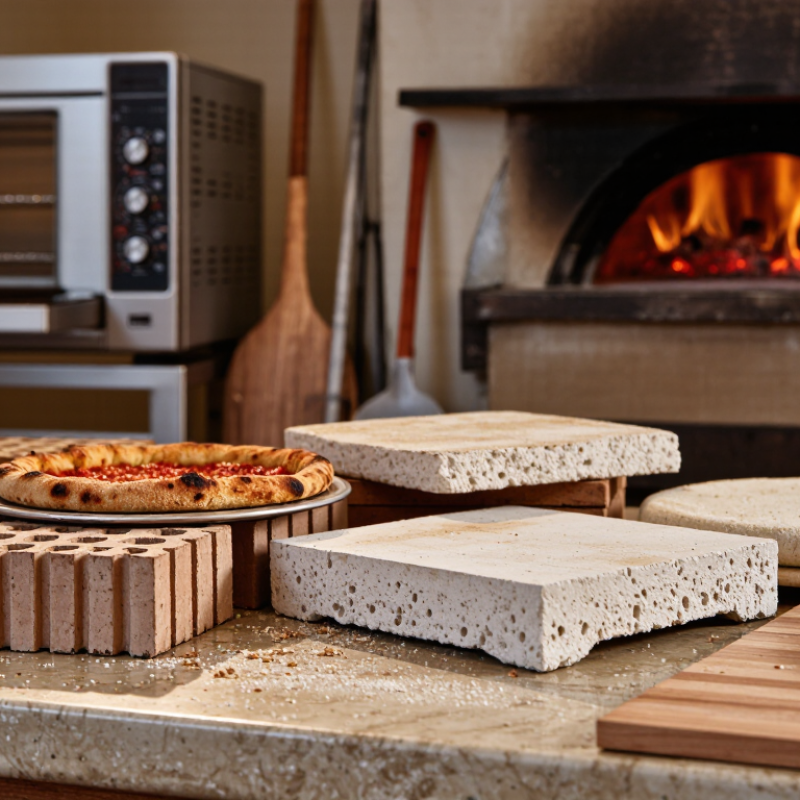
Choosing a pizza oven stone starts with understanding its working role. The stone stores heat, steadies the baking surface, and pulls moisture from the dough. This creates a firmer base and better browning. In my own testing, a stone with more thermal mass recovered faster after launching a second pizza. That assumption was wrong at first.
Material and thickness matter. Dense cordierite or refractory ceramic usually handles repeated heating better than fragile, highly porous material. ASTM C373 measures water absorption, while ASTM C1161 evaluates flexural strength in advanced ceramics. These standards do not guarantee perfect baking, but they reveal useful durability signals. A thicker stone can hold heat longer, yet it may need more preheating time. Not always convenient.
Industry demand also supports careful equipment choices. The National Restaurant Association’s 2024 State of the Restaurant Industry Report projected U.S. restaurant sales above one trillion dollars. That figure reflects a large, quality-focused food sector, not a promise for home results. For selection, check the oven’s internal dimensions, stone weight, heat limit, and cleaning instructions. Avoid sudden temperature changes. Use caution. A stone that looks impressive may still bake unevenly if airflow is restricted or the oven floor is poorly calibrated. Data helps, but flour, dough hydration, and preheating habits still require practical testing.
| Stone Material | Typical Maximum Use Temperature | Heat-Up Behavior | Thermal Shock Resistance | Typical Thickness | Best Use |
|---|---|---|---|---|---|
| Cordierite | Approximately 500–1,000 °C, depending on composition and construction | Moderate heating; retains heat well after preheating | Very good | 10–20 mm for home ovens; thicker options are available | Versatile home baking and frequent use |
| Dense Ceramic | Approximately 450–800 °C, depending on the formulation | Heats steadily and provides consistent bottom heat | Good when preheated gradually | 10–15 mm is common | Everyday pizza, bread, and reheating |
| Fireclay | Approximately 800–1,200 °C, depending on the clay body | Slower to heat but offers strong heat retention | Very good when fully cured | 20–40 mm in heavy-duty installations | High-temperature ovens and repeated baking |
| Soapstone | Commonly used below approximately 500–600 °C | Slow to heat, with excellent heat storage | Good, but temperature changes should be gradual | 20–40 mm is typical | Long baking sessions and stable residual heat |
It stores heat and steadies the baking surface. It also absorbs moisture from dough. This helps create a firmer, browner crust.
Measure the oven floor, door opening, rack width, and clearance. Leave space around the stone for airflow. A stone can fit but still block heat circulation.
Dense cordierite and refractory ceramic generally tolerate repeated heating better. Avoid fragile, highly porous materials. Material names alone are not enough.
Not always. Thick stones store heat longer but need more preheating. They also add weight to the oven rack. My earlier assumption was wrong.
Heat it gradually for about 30 to 45 minutes. Thicker stones may require longer. Watch the oven’s temperature limit.
Check its stated heat rating and heating method. Electric coils, fans, and direct flame stress stones differently. A stone made for gentle heat may crack under sudden flame.
Let it cool completely before cleaning. Brush away crumbs with a dry scraper or soft brush. Do not soak it. Avoid soap.
Sudden temperature changes can create thermal stress. Moisture trapped inside pores may expand during heating. Keep the stone dry and avoid cold food on a very hot surface.
Store it level in a dry place. Inspect deep cracks, loose pieces, and rough edges. Small stains are normal. A growing crack means stop using it. Safety matters more than one extra pizza.
Choosing the best Pizza Oven Stones starts with understanding how they influence heat distribution, moisture control, and crust texture. A quality stone absorbs and transfers intense heat evenly, helping create a crisp base while keeping the inside light and tender. Different materials offer varying levels of heat retention, durability, and resistance to thermal shock, so the ideal choice depends on your cooking style and oven temperature. Consider the stone’s size and shape carefully to ensure it fits comfortably while leaving enough space for airflow and safe handling.
Thickness also affects performance: thicker stones generally retain heat longer, while thinner options may heat more quickly. Always check compatibility with your oven, including temperature limits and available cooking space. For safe use, preheat the stone gradually, avoid sudden temperature changes, and handle it only after it has cooled completely. Regularly remove loose food residue without harsh chemicals, and store the stone in a dry location to preserve its performance and extend its service life.
