
Choosing a reliable China manufacturer matters when global buyers source a Diy Pizza Oven for home kitchens, gardens, restaurants, or retail programs. The right supplier should offer more than attractive pricing. Product design, thermal performance, material safety, and consistent quality deserve careful attention. A pizza oven may look simple, yet its refractory stone, insulation layer, steel body, burner system, and ventilation design affect every bake.
This guide introduces leading China-based manufacturers serving international buyers. It considers factory experience, engineering capability, customization options, production capacity, and export support. Practical details matter. Ask for heat-up test records, cooking-temperature ranges, fuel information, spare-part plans, and clear packaging specifications. A serious supplier should also explain quality inspections and provide relevant compliance documents for the target market. Photos help, but samples and factory audits reveal more.
No supplier is perfect. A low quotation may hide weaker insulation or limited after-sales support. Even impressive product pages need verification. Buyers should compare samples, test stone recovery after several pizzas, and inspect welds, doors, handles, and controls. Small details often become costly problems later. This overview is designed to support a balanced decision, not promote one factory blindly. Some information may change with new models, certifications, or production arrangements. Therefore, confirm current specifications directly before placing an order. Careful questions create better partnerships. Good ovens create repeat customers.
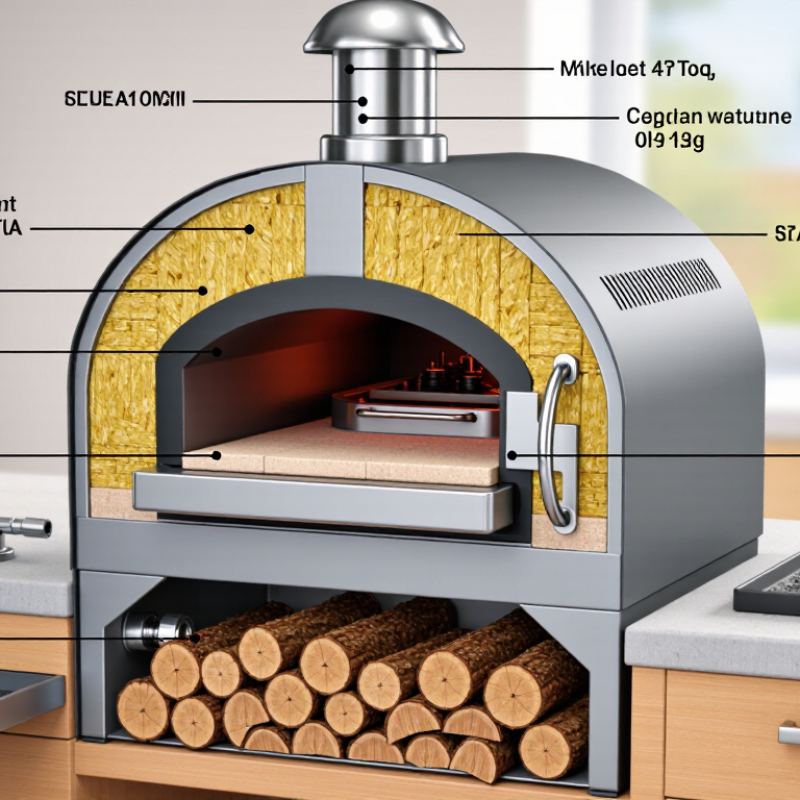
China Top DIY Pizza Oven Manufacturers for Global Buyers
What Defines a DIY Pizza Oven Manufacturer in China
A genuine DIY pizza oven manufacturer does more than assemble metal panels. It develops heat chambers, insulation layers, burners, and user instructions. In factory audits, buyers should inspect weld consistency, door alignment, stone thickness, and temperature recovery. These details affect a home cook’s first result. They also reveal production discipline.
Market demand supports closer scrutiny. IMARC Group reported that the global pizza oven market reached about USD 1.7 billion in 2023. Its forecast also indicates steady growth through 2032. However, estimates vary between research firms. That difference deserves attention. A responsible Chinese manufacturer should provide test records, material specifications, traceable batch numbers, and clear export documentation. It should also explain applicable safety requirements for each destination. A laboratory report is useful, but it does not replace real operating experience.
Tips: Request a live video inspection of the heating test. Ask for readings at several points inside the chamber. Confirm whether the stone, thermometer, gas parts, and insulation are included. Check packaging with a drop-test record, not only attractive photos. Ask how replacement parts are shipped after delivery. Some suppliers promise customization too quickly. That can signal weak engineering review. A better partner may question your design first. That small delay can prevent a costly mistake.
| No. | Evaluation Dimension | Typical Data or Industry Range | What a Capable DIY Pizza Oven Manufacturer Should Provide | Global Buyer Verification Point |
|---|---|---|---|---|
| 1 | Product Format | Portable countertop, cart-mounted, freestanding, or modular DIY oven kits | Clear assembly drawings, numbered components, fasteners, tools, and installation instructions | Confirm whether the quoted product is a complete oven or only a shell, insert, or accessory kit |
| 2 | Heating Options | Wood-fired, gas-fired, pellet-fired, electric, or dual-fuel configurations | Compatible burners, fuel-control parts, ventilation guidance, and conversion options where applicable | Check fuel compatibility, local installation rules, and whether conversion parts are included |
| 3 | Operating Temperature | Common pizza-oven operating range: approximately 350–500°C, depending on design and fuel | Validated temperature data, safe operating limits, thermal testing, and heat-management instructions | Request test conditions, thermometer location, preheating time, and maximum continuous-use temperature |
| 4 | Cooking Surface | Typical internal cooking widths: approximately 30–90 cm for residential DIY models | Accurate internal dimensions, replaceable baking stones, and suitable insulation beneath the deck | Match the internal size to the intended pizza diameter, batch volume, and available installation space |
| 5 | Primary Materials | Food-contact stainless steel, painted steel, aluminized steel, refractory brick, ceramic fiber, or calcium silicate | Material specifications, thickness information, heat-resistant coatings, and food-contact declarations where required | Verify material grade, coating performance, insulation type, and corrosion resistance for the destination climate |
| 6 | Thermal Insulation | Multi-layer insulation is commonly used to reduce heat loss and exterior surface temperature | Insulation structure, thickness, thermal test results, and safety instructions for clearance from combustible materials | Ask for exterior-temperature testing and minimum clearance requirements during operation |
| 7 | Customization Capability | Common options include dimensions, color, door design, handles, packaging, fuel system, and accessories | Engineering drawings, 3D files, prototype support, sample approval, and documented change control | Confirm tooling charges, prototype fees, minimum order quantities, and ownership of customized designs |
| 8 | Quality-Control Process | Typical controls include incoming-material inspection, welding checks, assembly inspection, leak testing, and functional testing | Quality-control plan, inspection records, batch traceability, and pre-shipment inspection support | Request inspection criteria, defect handling procedures, and photographs or reports from production batches |
| 9 | Production and Lead Time | Stock orders may ship faster; customized production commonly requires several weeks after design approval | A written production schedule covering sampling, material purchasing, assembly, inspection, and dispatch | Separate sample lead time, mass-production lead time, and shipping time in the quotation |
| 10 | Minimum Order Quantity | MOQ varies by product type, customization level, packaging, and required production setup | Transparent MOQ rules for standard products, private-label products, and fully customized models | Confirm whether MOQ applies per model, color, fuel type, or total order quantity |
| 11 | Safety and Compliance | Requirements depend on fuel type, electrical system, market, and intended residential or commercial use | User manuals, warning labels, test documentation, electrical data, gas information, and market-specific compliance support | Verify applicable standards and certifications for the exact SKU rather than relying on general factory claims |
| 12 | Packaging and Shipping | Export packaging commonly uses cartons, foam or molded protection, pallets, and moisture-control measures | Drop-resistant packaging design, packing list, carton dimensions, gross weight, and spare-part protection | Check container loading quantity, shipping marks, damage-claim procedures, and replacement-part availability |
| 13 | After-Sales Support | Support commonly includes digital manuals, assembly videos, troubleshooting, spare parts, and warranty processing | Defined warranty terms, spare-part list, response-time commitment, and technical support contact | Confirm warranty exclusions, replacement-part pricing, and support coverage after the first shipment |
| 14 | Documentation Capability | Commercial invoices, packing lists, product specifications, manuals, drawings, and shipping documents are commonly required | Consistent English documentation with product codes, revision dates, technical parameters, and installation diagrams | Ensure all documents match the actual product configuration and customs description |
| 15 | Manufacturer Qualification | Evidence may include factory audit records, production equipment, engineering staff, quality systems, and export experience | Factory video or audit access, production photos, sample development history, process records, and verifiable references without relying only on catalog claims | Use independent inspection, sample testing, and contract verification before placing a substantial order |
Note: Temperature ranges, dimensions, lead times, and order quantities are common industry reference ranges. Final specifications, compliance requirements, and commercial terms should be confirmed for the exact product configuration and destination market.
Request ISO-style quality procedures, batch records, material certificates, and temperature test results. A polished catalogue proves little. Ask for traceable inspection records.
Yes. Test one sample before approving mass production. Check the door seal, stone thickness, insulation, wiring, and packaging strength. The sample may reveal costly weaknesses.
Request test videos showing visible thermometers and complete heating procedures. Record heat-up time and surface temperature yourself. Testing methods can differ. I would not trust an impressive number alone.
Common options include colors, logos, burners, control panels, and exterior dimensions. Confirm whether each change affects certification or production consistency. More customization is not always better.
Verify product classification, origin, delivery terms, and destination-market requirements. A weak port connection can increase the final cost. The lowest quotation may not be cheapest.
Electric models may require electrical safety and electromagnetic compatibility evidence. Gas models may need market-specific certification. Check the exact model number. Generic certificates are risky.
Request photographs of serial labels, insulation, plugs, and packaging. Use a pre-shipment inspection when possible. Then test the oven after a cold start. Small oversights happen, even in experienced teams.
Compare exclusions, replacement parts, and realistic repair lead times. Ask for spare heating elements when suitable. A twelve-month warranty may exclude commercial use. That changes its real value.
China has become a practical sourcing destination for global buyers seeking a reliable Diy Pizza Oven manufacturer. These manufacturers typically offer a broad range of solutions, including portable outdoor ovens, wood-fired models, gas-powered units, electric ovens, and modular kits designed for home assembly. Their products are developed with attention to heat distribution, insulation, cooking capacity, fuel efficiency, portability, and ease of installation, making them suitable for different household and commercial applications.
When evaluating suppliers, buyers should review factory experience, production processes, material quality, testing procedures, customization services, and quality management systems. Capable manufacturers may support private-label packaging, design adjustments, accessory development, and flexible order quantities. Export experience is also important, particularly regarding product documentation, packaging durability, shipping arrangements, safety requirements, and destination-market compliance. Comparing technical specifications, factory capabilities, certifications, communication quality, and after-sales support can help global buyers select a dependable China-based supplier and build a stable long-term partnership.
